Why You Need a Team of DR & CT Experts When Regulated Image Quality Is Non-Negotiable
In regulated industries, imaging quality isn’t just a preference — it’s a requirement. Aerospace. Defense. Medical devices. EV power systems. Munitions. Jet engines. Additive parts. These sectors operate under strict codes, thorough auditors, and critical safety margins. One misinterpretation, one sloppy scan, one gap in technique, and suddenly you’re risking production delays, rework, regulatory non-compliance…or worse.
That’s why the technology alone isn’t enough.
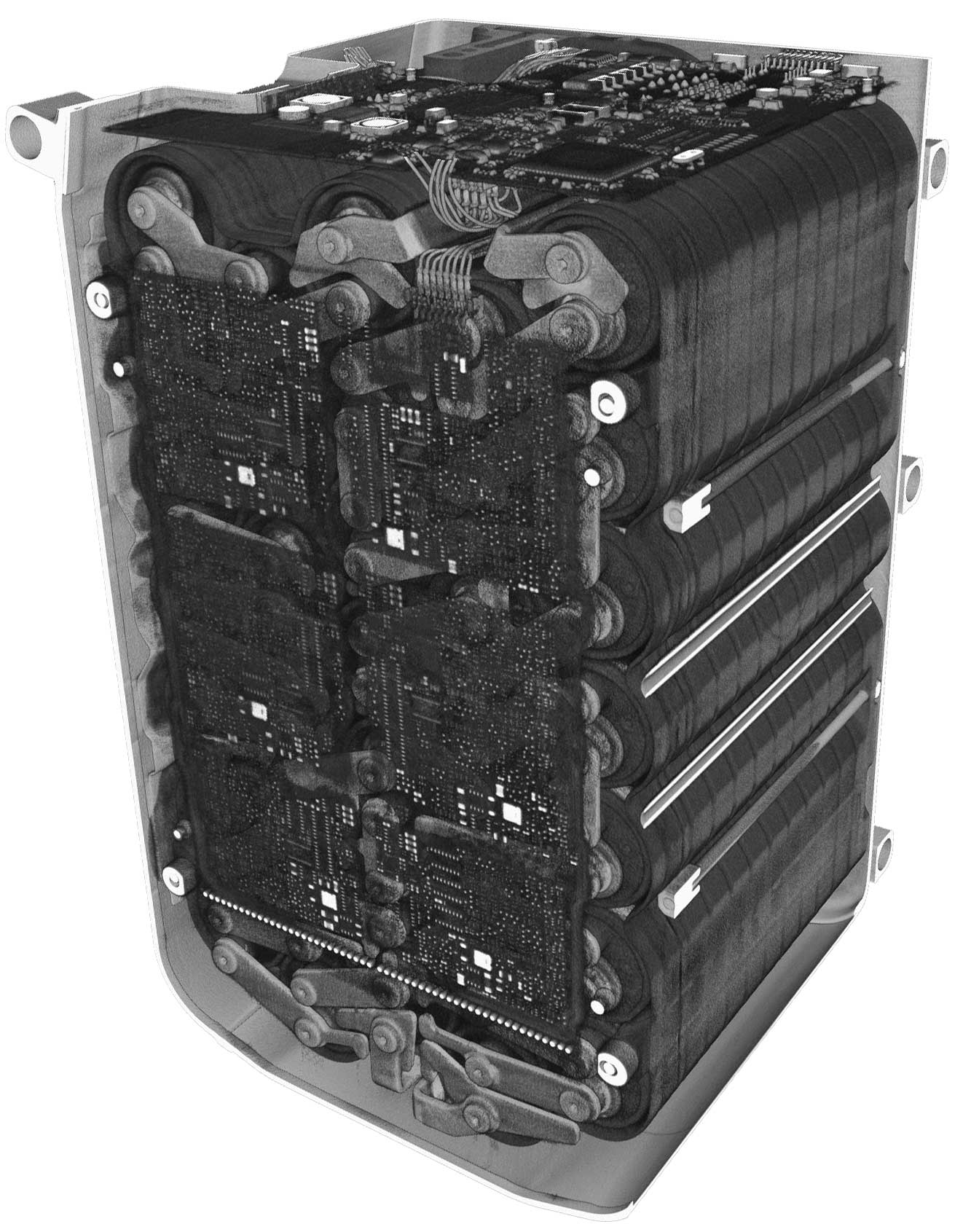
Yes, Digital Radiography (DR) and Computed Tomography (CT) have evolved dramatically — offering higher contrast, better resolution, advanced scatter compensation, automated defect recognition (ADR), and high-energy capability for dense materials. But regulated image quality depends equally on people: trained experts who understand how to use this technology within a certified, compliant workflow.
When your mission is critical, you need more than equipment.
You need a team who can back you up with technique development, scanning services, on-going service & maintenance, and “there when you need it” support.
Regulated Image Quality: No Room for Compromise
Regulated image quality isn’t a marketing buzzword. It’s governed by standards like:
- NAS-410 (aerospace personnel qualification)
- ASTM E2737 (DR system qualification)
- ASTM E2698 (DR technique qualification)
- ASTM E1695 (CT system qualification)
- ASTM E3375 (CT technique qualification)
- ISO 19232 / EN 444 (image quality metrics)
- NADCAP AC7114 (aerospace audit criteria)
- DOD 4145.26-M (munitions safety)
- ASME Sec. V & VIII (industrial code compliance)
Regulators, OEMs, and primes aren’t asking for great images — they’re asking for verifiable image quality with traceable repeatability.
And that requires expertise.
The technology is fully capable — the real question is, are you ready to make the most of it?
Modern DR/CT systems (especially those from leaders like North Star Imaging) include:
- High-resolution flat-panel detectors
- Advanced X-ray sources (including 9 MeV linear accelerator for high-energy CT)
- SubpiX™ for sub-pixel clarity
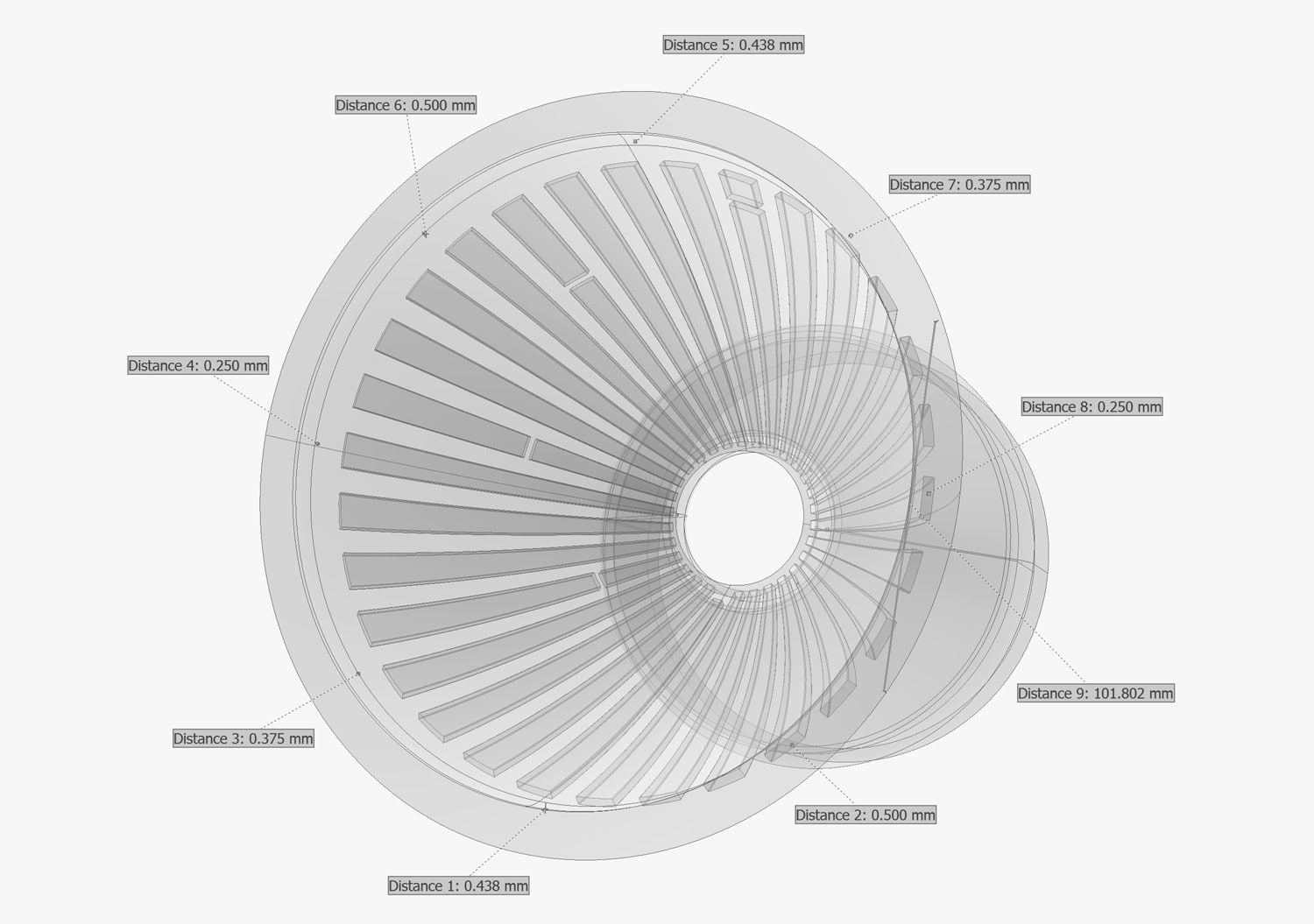
- Vortex™ for elongated objects that traditionally cannot fit into a single exposure without stitching
- Automated workflows and reconstruction algorithms
Even with advanced technology, experience is essential to ensure imaging is done correctly.
Factors such as beam energy selection, detector configuration, scatter correction, fixturing, focal spot considerations, scan trajectory, voxel size, reconstruction filters, and motion control all play a critical role in determining image quality. Each parameter influences the final result, and even a single misstep can produce an image that appears acceptable to the eye but fails to meet regulatory standards. That’s why expert guidance is essential — to ensure every setting, configuration, and process aligns with both technical and compliance requirements.
The Case for Expert Support
A dedicated DR/CT team brings:
1. Correct modality selection
Some defects are visible in DR. Others require volumetric CT. Experts know the breakpoints.
2. System qualification
Documentation, calibration, and verification aligned with ASTM and NADCAP requirements.
3. Image optimization under constraints
Dense alloys, multi-materials, complex scatter environments — experience matters.
4. Interpretation & defect characterization
In regulated sectors, you must not only find a flaw — you must prove it.
5. Audit-ready traceability
From technique sheets to qualification records, everything must be defensible.
A hardware-only approach simply doesn’t get you there.
When safety depends on the scan, precision is everything. Critical-use applications such as turbine blades, aircraft fasteners, explosive components, additive manufacturing parts, EV rotor housings, and orthopedic implants demand the highest standards of imaging accuracy. At this level, failure modes aren’t cosmetic — they’re catastrophic. For that reason, primes, OEMs, and defense customers are increasingly specifying not only the capability of the equipment but also the qualifications and expertise of the personnel performing the scans.
North Star Imaging Sets the Standard for Quality and Precision
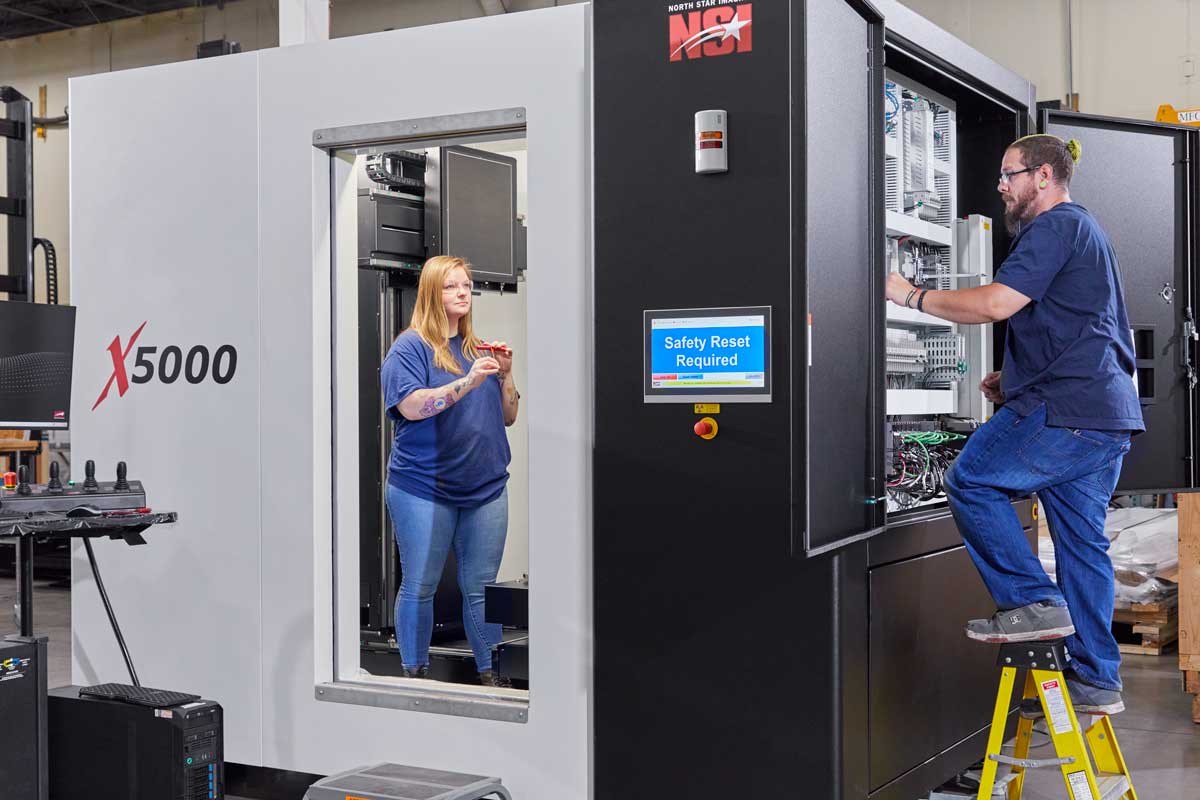
North Star Imaging is more than a cabinet manufacturer. Their value is anchored in:
Certified Experts
ASNT/NAS-410 Level II and III personnel support training, scanning services, and technique development.
Turnkey Compliance
ISO 9001:2015, ITAR registration, NADCAP, and DOD compliance make their workflows audit-proof.
High-Energy Capability
Up to 9 MeV — unlocking image quality in thick, dense, multi-material parts that standard systems simply cannot penetrate.
Advanced Modalities Built In
SubpiX™ and Vortex™ are integrated into even compact systems like the refreshed X25 — allowing high-magnification regulated images in small footprints.
Training for Anyone (Not Just Owners)
North Star Imaging offers DR, CT, and Expert CT training for individuals even if they don’t own NSI equipment — a level of access that accelerates workforce competency.
Rapid Production Support
Scan as needed:
- by the hour (DR),
- per scan (CT),
- or by project
…to address production overflow, backlogs, or urgent failure investigations.
In regulated environments, turnaround speed matters — but only if the images are meet the requirements.
Audit Season Is Coming for Everyone
The industry is shifting. Regulatory pressure is increasing. Cross-functional traceability is becoming mandatory. Primes are pushing inspection risk downstream.
And without qualified support, manufacturers risk:
- audit findings
- non-conformances
- rework costs
- lost contracts
Regulated image quality isn’t “nice to have.”
It’s the price of admission.
Technology Evolves. So Should Your Team.
X-ray imaging is advancing rapidly, driven by higher-resolution detectors, smaller focal spots, dynamic reconstruction algorithms, automated defect detection, and machine learning–assisted classification. Keeping pace with these innovations demands continuous education and adaptation. Partnering with an organization that lives and breathes this evolution ensures you’re never limited by yesterday’s techniques when facing tomorrow’s standards.
The Bottom Line
In industries where image quality is regulated:
✅ Hardware alone cannot guarantee compliance
✅ Expertise determines repeatability and defensibility
✅ Standards evolve — and so must your technique
✅ Regulators care about the competency behind the scan
When your component’s mission involves human life, flight safety, battlefield readiness, or structural integrity, there’s no substitute for seasoned DR/CT experts who understand:
- physics
- code requirements
- modality selection
- artifact mitigation
- documentation demands
- regulatory expectations
That’s why the smartest organizations have experts in their corner.
Ready to Strengthen Your Regulated Imaging Program?
Whether you’re:
- new to CT,
- scaling DR for production,
- facing backlogs,
- preparing for a NADCAP audit,
- or tackling dense materials…
…having the right team behind you isn’t optional.
It’s your insurance policy against risk.
And in regulated industries, risk is the enemy.