
DR and CT in Forensic and Fire Sciences
NDT in Forensics
Non-Destructive Testing (NDT), particularly 2D Digital Radiography (DR) and 3D X-ray Computed Tomography (CT), has an expanding role in forensic analysis for examining failed components like batteries or electronics without compromising evidence. Some of the key challenges include analyzing fire damaged specimens, comparing these artifacts to exemplars, and inspecting intact products before disassembly. X-ray imaging addresses these by preserving evidence integrity, critical for legal and insurance compliance, and streamlining investigations to enhance profitability. North Star Imaging (NSI) excels with intuitive software programs and system controls, simplifying complex data analysis. NSI’s technology enables precise failure analysis offering significant value by maintaining evidence and accelerating case resolution.

Who is Safety Engineering Labs?
Safety Engineering Laboratories, Inc. (SEL), established in 1986 and based in Warren, Michigan, with additional facilities in Yale, Michigan, is a specialized engineering firm offering forensic investigation, fire science, and safety consulting services. With a team of professionals, including certified fire investigators and engineers, SEL provides expertise in fire and explosion analysis, product failure testing, and regulatory compliance for industries like consumer goods and manufacturing. Utilizing advanced technologies such as 3D imaging, industrial CT scanning, and fire modeling, SEL delivers precise failure analysis and litigation support, earning a reputation for scientific integrity and comprehensive reporting over its nearly four-decade history.
Case Study Overview
At North Star Imaging and Safety Engineering Laboratories, Inc., our commitment to client confidentiality and privacy is paramount, as the sensitive nature of forensic investigations often involves personal information, and active cases. To uphold the highest ethical standards and comply with privacy regulations, we safeguard all client-specific information.
Safety Engineering Labs partnered with NSI on a recent close call situation.
Consequently, this case study focuses on a publicly shareable example. We will showcase the failure of a light switch in a broad overview of the investigative process using 2D and 3D X-ray imaging.
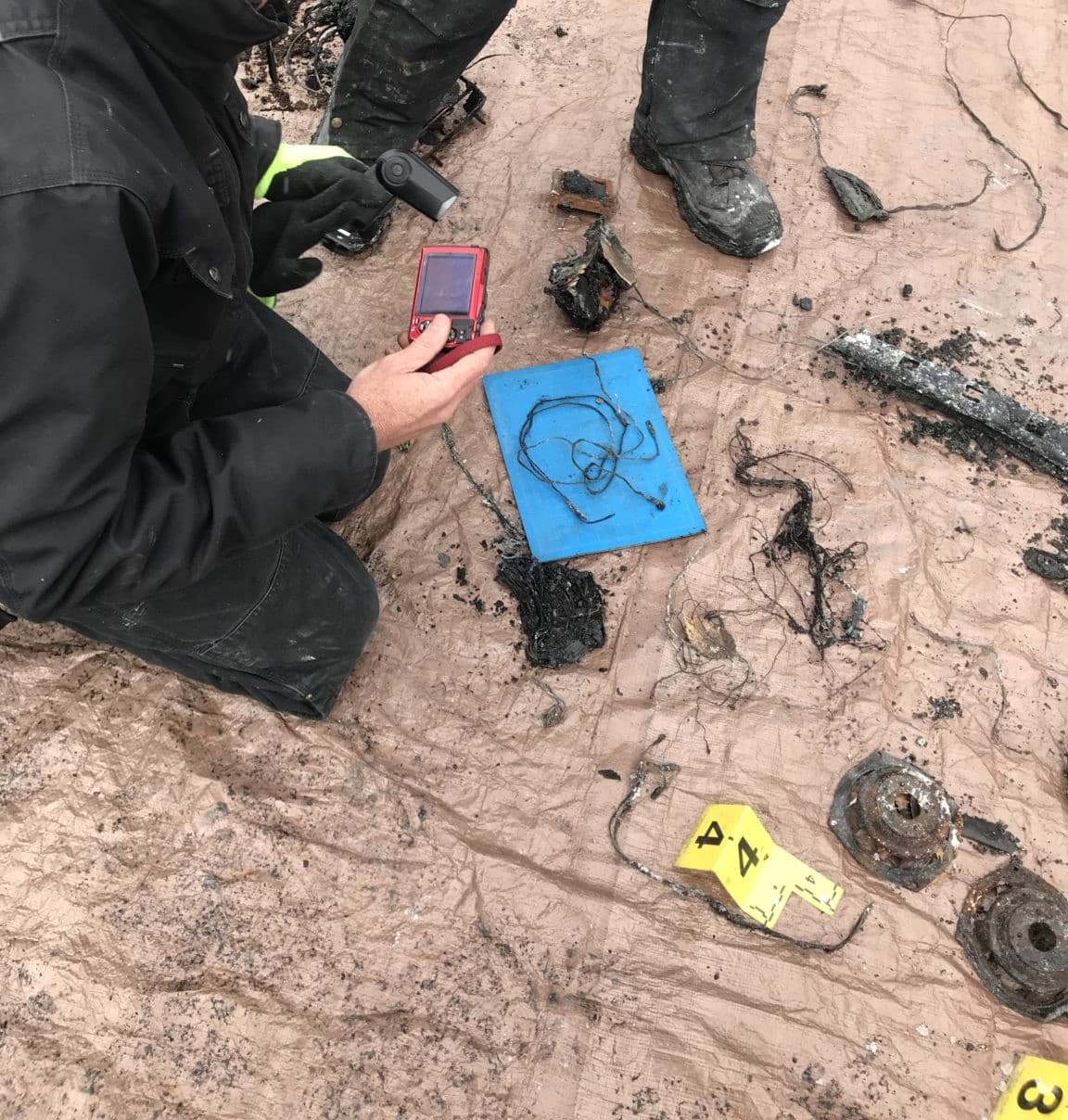
Initial Assessment and Background Collection
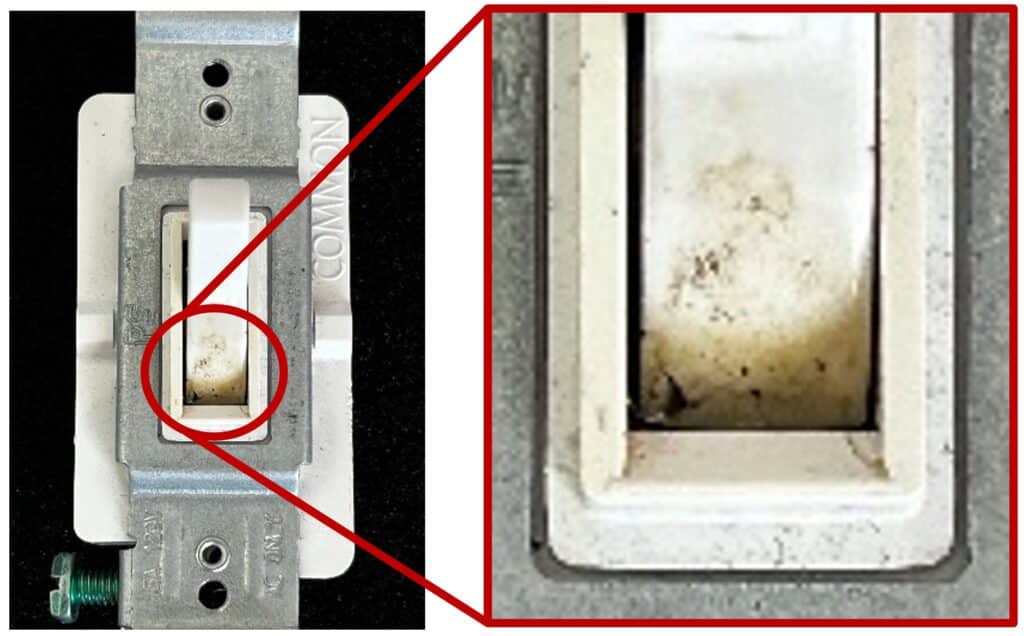
“I was cleaning the wall that day and sprayed cleaner onto the light switch…”
-Background information from impacted individual
Interview
An individual was at home when they smelled a burning odor. They could not determine exactly where the odor was coming from. They also noted that a light switch leading to the stairway would not shut off. Looking closer it appeared the electrical burning smell was coming from the light switch, it would not shut off, and it was hot to the touch. The individual then immediately shut off power to that area of the house.
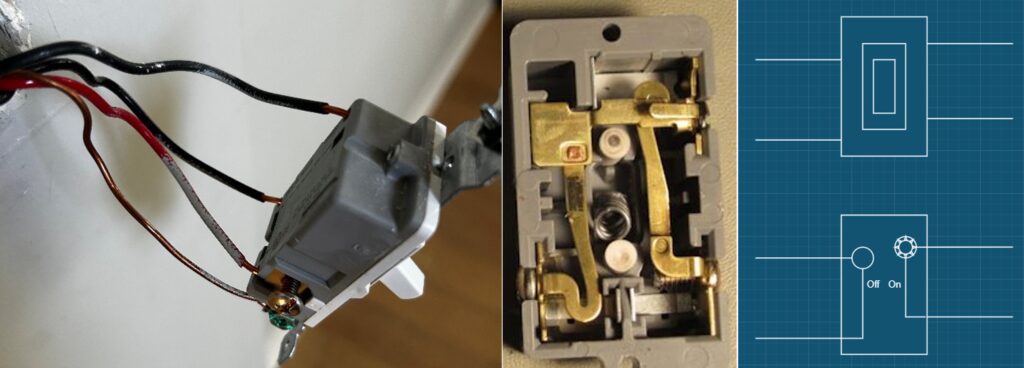
Review of Electrical Schematics/Part Drawings
Reviewing a product manufacturer’s drawings provides detailed insights into a product’s design, materials, and specifications which can reveal potential fire hazards or defects. Examples include improper wiring, inadequate insulation, or flammable components. These drawings help investigators understand how the product was intended to function, identify deviations from the design that may have contributed to the fire, and assess whether manufacturing flaws or improper assembly may have played a role.
Note: the following images and schematics are not relative to the actual sample and are only meant to be supportive in description of the process.
Review Recalls
A thorough review of product safety warnings and recalls is a vital part of a fire investigation. This can help identify potential fire causes linked to defective or hazardous products, such as faulty electrical components or flammable materials. This process aids in establishing liability, ensuring accurate investigations by providing context about known product issues. It also supports legal and insurance claims by demonstrating a product’s documented risks and guides investigators to focus on specific part features or known issues. By cross referencing scene evidence with recall databases like those maintained by the U.S. Consumer Product Safety Commission, investigators can conduct thorough, evidence-based analyses.
Review the news articles or documented case information
Reviewing news articles or case information during a fire investigation provides critical information, including incident details like location, time, and initial witness accounts, which offer context for the event. They can reveal historical patterns of similar incidents, regulatory actions, or lawsuits related to a product or manufacturer, pointing to known hazards. The addition of this information allows the investigator key insights that can be cross referenced with physical evidence.
Analysis and Methodology
In a fire investigation a new identical version of a suspected fire initiating item is key for comparison to the damaged evidence. Using this exemplar in contrast to the fire artifact, investigators can identify design flaws, manufacturing defects, or normal operational characteristics that may have contributed to the fire. This scientific approach strengthens findings and prevents misinterpretations especially when destructive analysis might obscure subtle defects.
“The nice thing about CT is you can get better definition of items… for example you can follow melting/arcing to a wire and trace that through the sample, isolate certain areas that can give you more information to form a proper hypothesis…”
-Tom H. from SEL
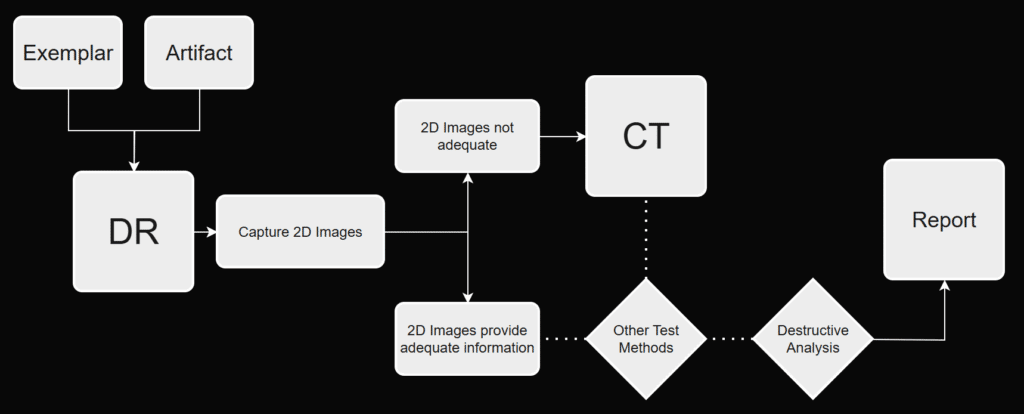
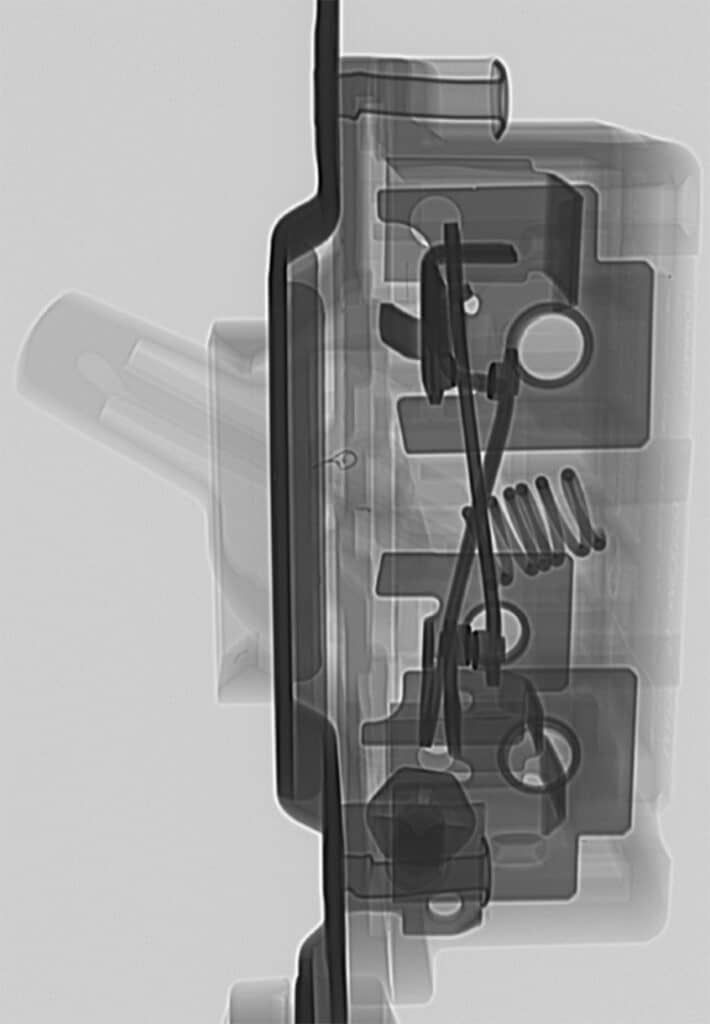
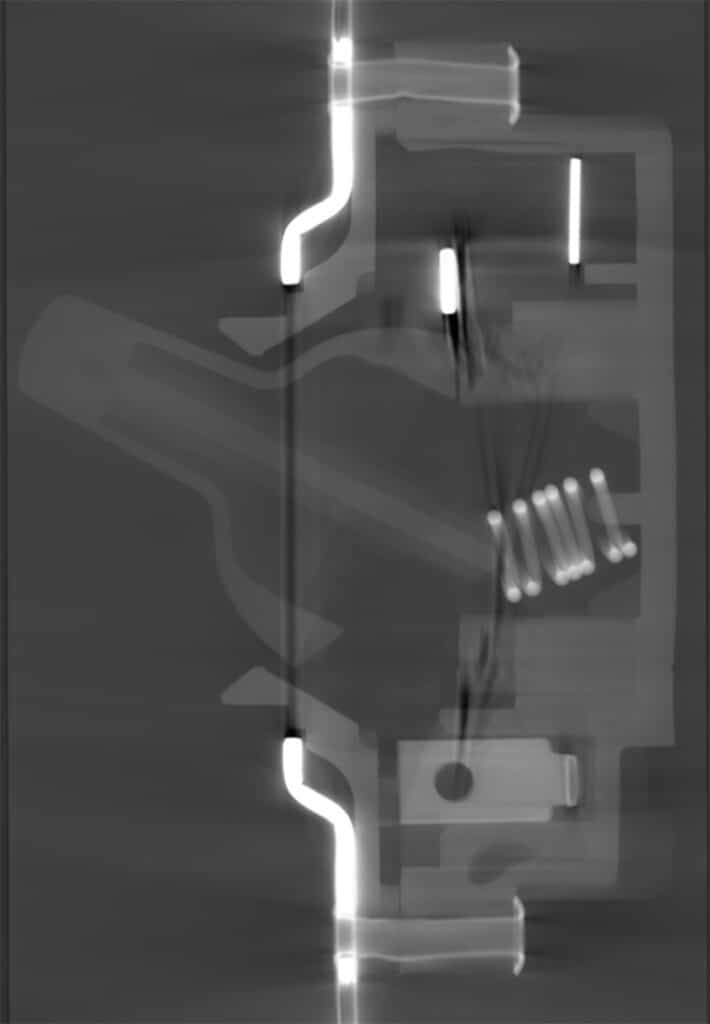
“Having the ability to manipulate the image of the artifact without physically changing the specimen…”
-Tom H. from SEL
Reporting
The reporting function in fire investigations is essential for documenting findings, conclusions, and evidence detailing the cause or potential cause of the fire. Details from each step discussed are documented to prove or disprove a theory through scientific evidence.
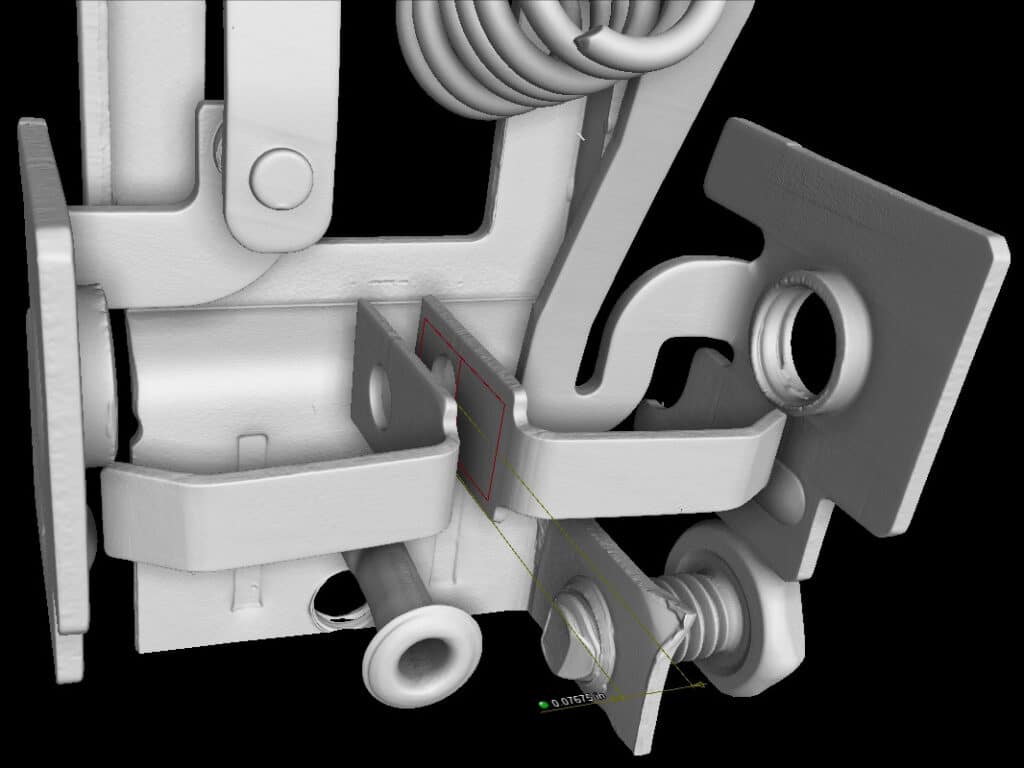

Images 1-2: An example of a typical measurement comparing the known good (exemplar) to known bad (artifact).
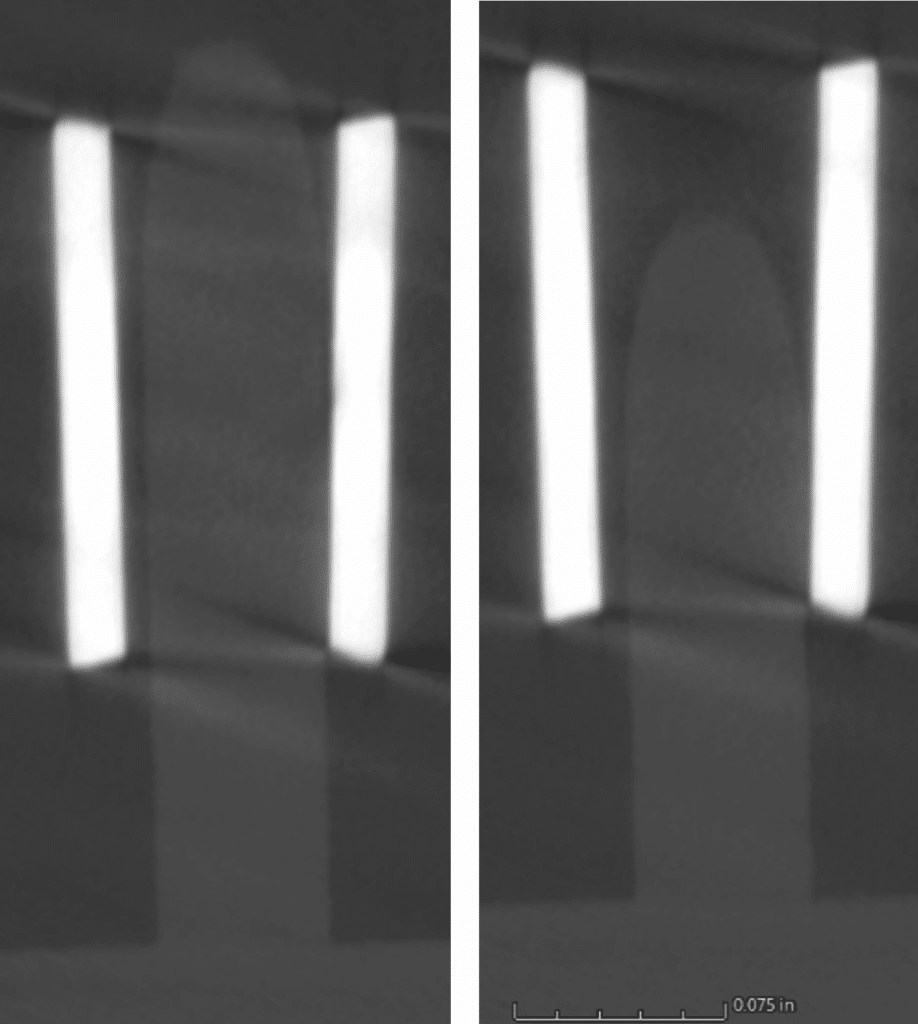
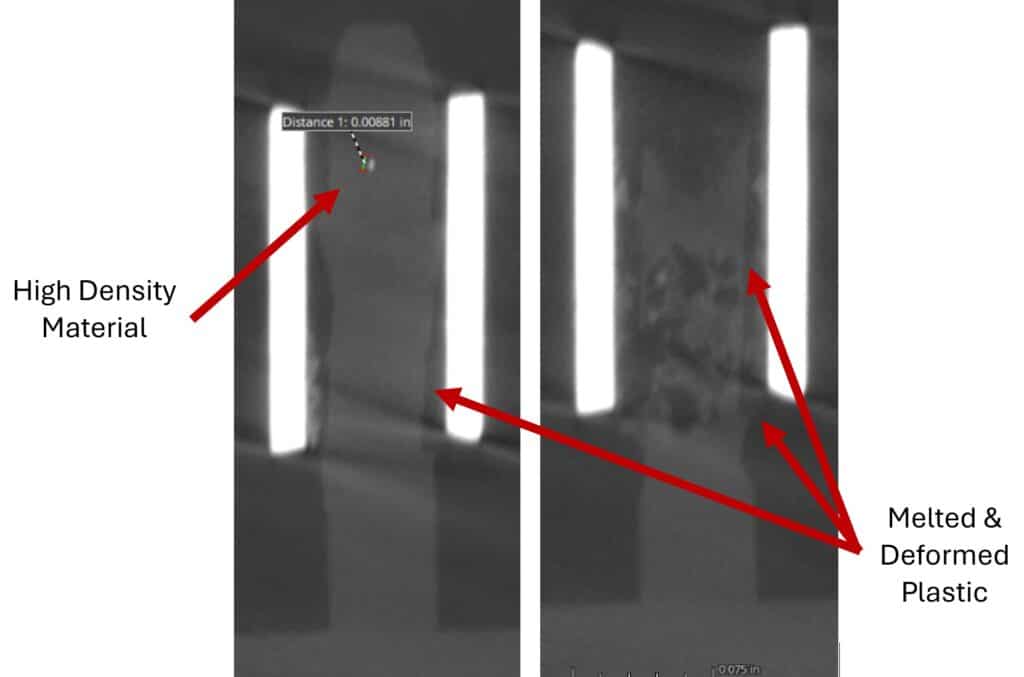
Images 3-6: An example of suspect areas comparing the known good (exemplar) to known bad (artifact). Showcasing high density material in a severely melted region.
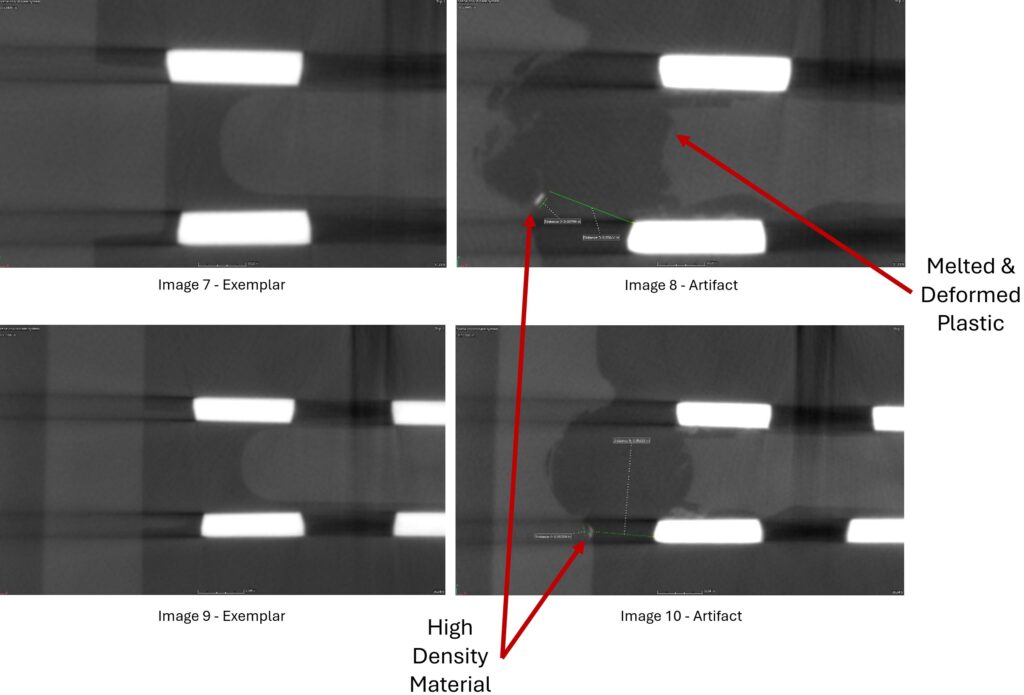
Images 7-10: An example of suspect areas comparing the known good (exemplar) to known bad (artifact). Showcasing high density material in a severely melted region.
Failure Hypothesis
A switch left in the “on” position and exposed to cleaning solution created a high-resistance situation, causing the switch to overheat, melt the plastic, and fuse the contacts preventing disconnection. It is possible that arcing or metal nodules from the manufacturing process exacerbated local exposure to the fluid. The cleaning spray was likely the initiating event, as liquid infiltration generated excessive heat. However, without the knowledge of the liquid spray, destructive or chemical analysis might be needed to definitively determine failure. Scientific evidence is essential to confirm the cause, as unsupported hypotheses cannot definitively determine the fire’s origin.
Special thanks to:
Thomas Hoffmann
Certified Fire and Explosions Investigator (CFEI), CT Specialist
SEL Inc
For more information visit: https://safetyengineeringlabs.com/laboratory-services/ct-scanning/